Login


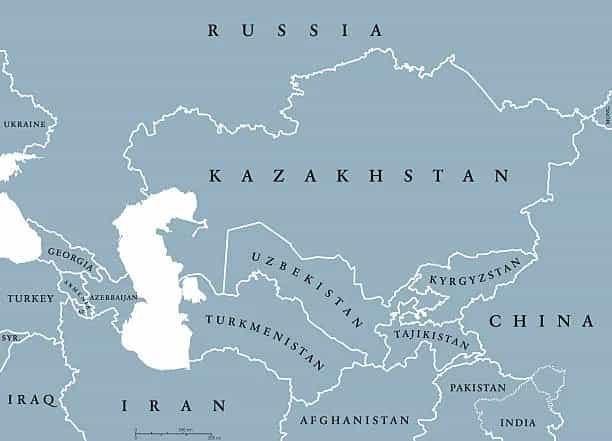
Experts and political analysts from Central Asia, Azerbaijan, and Türkiye have assessed the outcomes of the eighth Consultative Meeting of the Heads of State of Central Asia and Azerbaijan, which took place in early October in Awaza, Turkmenistan. In their view, the summit solidified the transformation of the "C6" format from a consultative platform into an economic and geostrategic alliance. This is reported by the online newspaper "Golden Age."
Regional analysts have highlighted five key takeaways.
First, in their assessment, Azerbaijan’s inclusion in the format has definitively solidified the Trans-Caspian "bridge." The combined GDP of the six countries exceeds $620 billion, with a total population of approximately 85 million people.
Secondly, the signing of documents regarding the procedures for these meetings signals a readiness to move from mere declarations to a systematic coordination mechanism. Experts believe that the transfer of the chairmanship to Azerbaijan will lead to a greater focus on ties with the South Caucasus and Europe.
Thirdly, the transport sector is identified as central to the "C6" format: the development of the Trans-Caspian route via Turkmen and Azerbaijani ports is becoming a priority for Kazakhstan, Uzbekistan, and other countries in the region.
Fourth, initiatives aimed at digitizing customs procedures, optimizing tariffs, and establishing a shared computing infrastructure and databases for industrial cooperation have received high praise. This is viewed as a step toward reducing technological dependence and increasing the value added to regional products.
Fifth, analysts underscored the importance of the environmental agenda—most notably the issue of the Caspian Sea’s receding water levels and the rational use of water resources—as well as the prospects for "green" energy and electricity exports for Azerbaijan, Kazakhstan, and Uzbekistan.
Sanjar Valiev, Director of the Center for Foreign Policy Studies and International Initiatives under the Ministry of Foreign Affairs of Uzbekistan, noted that the formalization of these meetings and the inclusion of Azerbaijan are transforming the region from an "object" of geopolitical rivalry into a "subject" of international politics—one capable of independently shaping its own transit-logistics and economic agenda.
Erkin Tukumov, former director of the Kazakhstan Institute for Strategic Studies and former Kazakh ambassador to Pakistan, noted that expanding the format is seen as key to transforming the region into a unified transit hub and an independent center of power in Eurasia. Farkhod Tolipov, director of the Uzbekistan-based institution "Bilim Karvoni," believes that strengthening the internal institutional ties of the "group of six" is the only way to establish the region as an international actor—a status that major powers would be compelled to reckon with.
Zaur Mammadov, Chairman of the Baku Club of Political Scientists, emphasized that pooling the resources of the region’s countries and Azerbaijan creates a bridge between Asia and Europe, making the macro-region an economically self-sufficient participant in global trade. Analysts at the Turkish center ANKASAM, for their part, noted that the transformation of the format creates a configuration that possesses its own resource and transit weight on the international stage.
Some experts take a more pragmatic view: while it is difficult to move forward without strict centralization, the current flexible format is more viable at this stage. According to them, it is built on the principles of "soft regionalism" and networked cooperation: there are no supranational bodies, and countries retain their sovereignty, choosing to participate only in projects that are advantageous to them. Analysts emphasize that the "C6" is not a bloc formed "against anyone"; rather, it functions as an economic and transit cooperative that does not preclude relations with China, Russia, the United States, or EU countries.
Some Russian experts, including those from the Valdai Club and IMEMO RAS, view the summit’s outcomes primarily through the lens of strategic partnership, logistics, and regional security. Western analysts from Chatham House and the Carnegie Endowment assess them in terms of the diversification of logistics and the strengthening of regional integration.
Following the summit, the leaders of the six countries signed a Joint Statement and approved a decision regarding the regulatory documents for these meetings, taking into account Azerbaijan’s full accession. The next meeting will take place in 2027 in Azerbaijan.