Login
Login





Artificial intelligence, digital twins, automation and advanced data analytics are becoming increasingly important tools for improving efficiency, reliability and environmental performance across the global energy industry.
These technologies are changing the way oil and gas fields are explored, developed and operated. They can help companies analyse geological information, optimise drilling, forecast production, monitor equipment condition and identify technical problems before they lead to costly shutdowns.
For Turkmenistan, which is implementing major projects in natural gas production, transportation, offshore development and gas processing, digital transformation offers significant opportunities to improve the performance of existing assets and support the development of new infrastructure.
One of the most practical applications is predictive maintenance. By collecting and analysing real-time information from compressors, pipelines, processing facilities and other equipment, operators can identify early signs of deterioration and plan repairs before failures occur. This can reduce unplanned downtime, improve industrial safety and extend the operating life of valuable assets.
Digital twins are also gaining importance in the energy sector. A digital twin is a virtual model of a physical asset, such as a gas-processing plant, pipeline or production facility. It allows engineers to test operational scenarios, assess equipment performance and evaluate proposed changes before implementing them at the actual site.
Artificial intelligence can also support geological and seismic interpretation, reservoir modelling, drilling optimisation and production forecasting. Its role is not to replace engineers, but to help specialists process larger volumes of information, compare alternative scenarios and identify potential risks more quickly.
As energy systems become more connected, cybersecurity is also moving to the centre of operational planning. Digitalisation creates new opportunities, but it also requires stronger protection of industrial control systems, production data and communications infrastructure.
Cybersecurity in the energy sector is therefore no longer only an information-technology issue. It is directly connected with operational reliability, industrial safety and business continuity.
Digital technologies are also supporting efforts to improve environmental performance. Satellite monitoring, drones, fixed sensors and advanced analytical systems can help identify methane emissions and other operational inefficiencies. The value of these technologies lies not only in detecting a problem, but in enabling companies to respond rapidly and take corrective action.
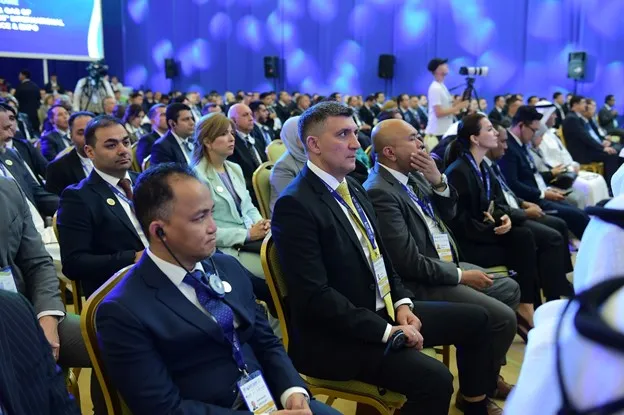
The growing importance of technological cooperation will be reflected in the programme of the 31st International Conference and Exhibition “Oil and Gas of Turkmenistan – OGT 2026”, which will be held in Ashgabat on 21–23 October 2026.
The preliminary programme includes a dedicated discussion on technology, digitalisation and artificial intelligence in the energy sector. The session will cover artificial intelligence, digital oilfields, digital twins, automation, cybersecurity, data analytics, asset optimisation and smart energy infrastructure.
Digital transformation will also feature in the strategic plenary discussions and in the Executive Fireside Conversation involving senior representatives of international energy companies.
The OGT Future Energy Leaders’ Forum will additionally examine digital skills, artificial intelligence, professional development and cooperation between universities and industry.
The development of Turkmenistan’s energy sector increasingly requires the combination of natural resources, engineering expertise, modern technologies and professional training.
International partnerships can play an important role by providing access not only to equipment and software, but also to knowledge transfer, technical support and the development of national specialists.
Digitalisation should not be pursued as an objective in itself. Its value will be measured by practical results: safer operations, more reliable production, more efficient infrastructure, improved environmental monitoring and better investment decisions.
As the global energy industry becomes more technology-driven, the ability to combine physical assets with digital intelligence will become an increasingly important source of competitiveness.
For Turkmenistan, this creates an opportunity to connect its substantial energy-resource potential with the technologies shaping the next generation of the international energy industry.
Detailed information about the 31st International Conference and Exhibition “Oil & Gas of Turkmenistan – OGT 2026”, including delegate registration, exhibition participation, and partnership opportunities, is available on the official website: www.ogt-turkmenistan.com.