Login
Login





From the 2nd century BC until the 15th century, Central Asia served as one of the pivotal regions connecting the East and the West. Today, the Central Asian region remains a vital crossroads where major geostrategic corridors and transport routes converge. Against the backdrop of the transformation of global supply chains, Central Asian and South Caucasian nations possess a unique opportunity not only to enhance their transit potential but also to become full-fledged participants in global economic processes. Mirshod Shakirov, an Uzbek international businessman operating across several countries and founder of the "Business Diplomat" (international intellectual, analytical, and practical institute (Think-Do Tank), shared his insights on this matter with Turkmenportal.
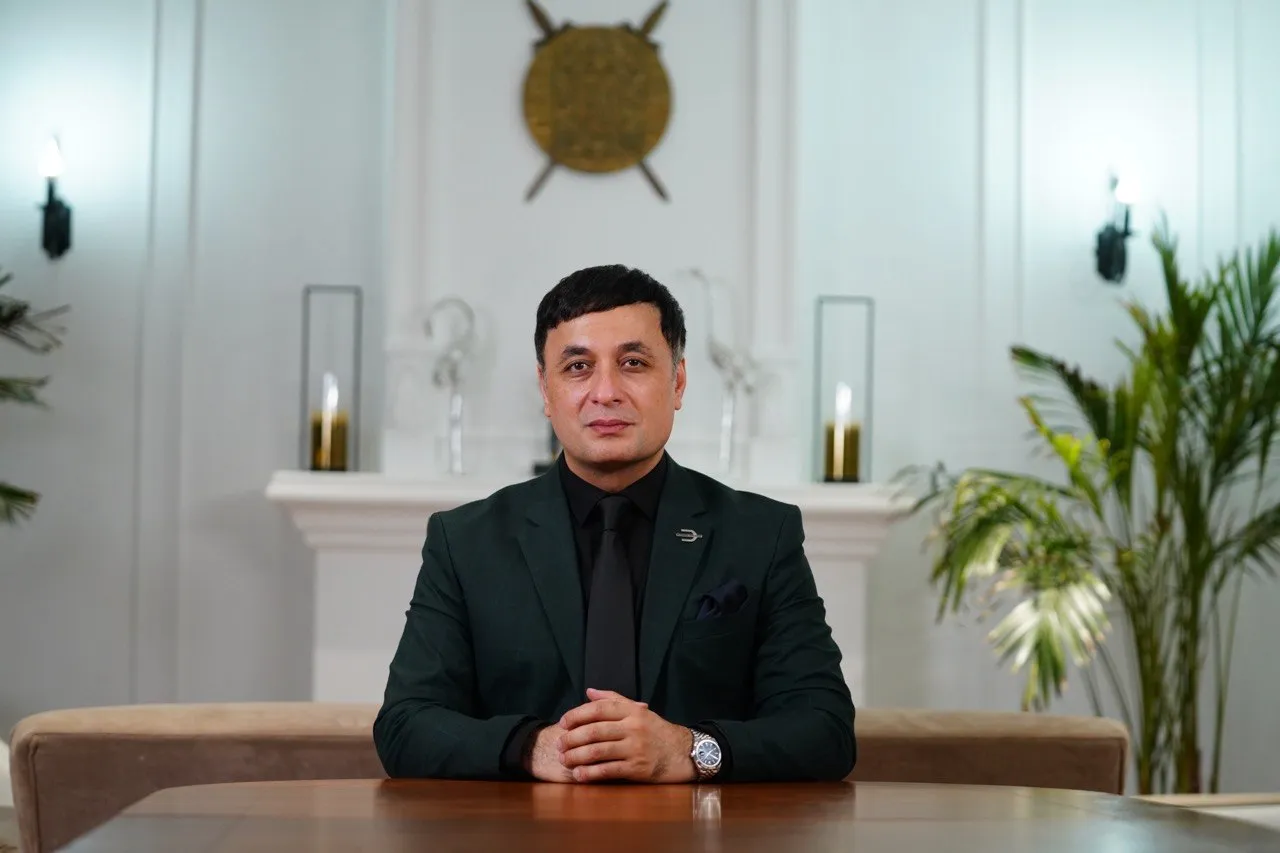
According to Shakirov, for much of the past three decades, the global economy relied primarily on cost minimization and supply chain efficiency. International trade expanded under the assumption that markets would remain stable and largely predictable. Today, however, this paradigm has shifted completely.
Geopolitical tensions, sanctions, logistical crises, and mounting concerns over energy and food security have fundamentally altered perspectives on global connectivity. International corporations are no longer merely asking where products can be manufactured at the lowest cost; instead, they are searching for long-term stability, resilience, and trusted partnerships. Consequently, geography has once again become one of the world's most valuable strategic assets.
"Central Asia stands out prominently among the regions shaping this new reality. The 'Middle Corridor' (Trans-Caspian International Transport Route), linking East and West, is evolving from a mere alternative transit path into the foundation of a new geoeconomic space that unites Central Asia, the South Caucasus, Türkiye, and Europe. History demonstrates that major trade routes have never been solely about the movement of goods—they have always generated investment, innovation, and comprehensive economic ecosystems," Shakirov notes.
The international businessman emphasizes that Turkmenistan, owing to its strategic geographical position, internationally recognized policy of permanent neutrality, and regional role, is becoming a crucial bridge of stability connecting Central Asia with the broader Eurasian economy.
"In times of geopolitical uncertainty, stability and predictability become the most critical economic resources. Turkmenistan’s policy of neutrality provides international investors and business entities with the confidence needed for long-term strategic planning, while effectively minimizing geopolitical risks. In today’s fragmented world, trust itself has become the most valuable asset.
The country's location on the eastern shore of the Caspian Sea, combined with its vast energy resources, elevates it from a conventional transit point to one of the stabilizing anchors of the Eurasian economic landscape. Maritime connectivity developing across the Caspian is expanding beyond transport functions, acting as a catalyst for industrial cooperation and regional value creation.
Furthermore, strengthening intra-regional dialogue and constructive relations between neighboring countries have significantly enhanced the environment for trade and cross-border cooperation. Economic integration cannot be built on physical infrastructure alone; it fundamentally relies on mutual trust among governments, institutions, businesses, and societies. This growing trust, in turn, makes the region far more attractive to international capital," states Mirshod Shakirov.
Currently, much of the discussion surrounding the Middle Corridor focuses exclusively on physical infrastructure—new railways, modern ports, expanded logistics terminals, and digital customs systems. While these investments are indispensable, historical experience indicates that infrastructure alone cannot transform regions into global economic powerhouses. Successful economic corridors must eventually evolve into economic ecosystems.
In his opinion, the future competitiveness of the Middle Corridor will depend not on the speed of border crossings, but on the quality of the economic and entrepreneurial environment surrounding these routes. The next phase of development should focus not merely on connecting territories, but on linking industries, investors, entrepreneurs, and research institutions across Central Asia and the South Caucasus.
Shakirov further emphasized that the countries achieving sustainable prosperity over the coming decades will not necessarily be those that build the longest railways or the largest ports. Instead, they will be the ones that develop the strongest human infrastructure.
"Physical infrastructure moves goods, but human infrastructure creates opportunities," Shakirov asserts.
"By human infrastructure, I mean a new generation of internationally-minded entrepreneurs, executives, and leaders who possess the skills to work across cultures, build trust, and transform international relationships into long-term economic partnerships. Although digital platforms and artificial intelligence optimize logistics, they can never replace mutual trust between people. The 'Business Diplomat' international intellectual, analytical, and practical institute (Think-Do Tank), which I founded, operates precisely toward this objective," the international investor shares.
He highlights that while governments establish the political and legal frameworks, the private sector serves as the practical driving force of integration. According to Shakirov, the Middle Corridor enables the regional business community to adopt a broader, borderless perspective:
Logistics companies in Turkmenistan establishing partnerships with manufacturers in Uzbekistan;
Kazakh digital technologies being implemented to modernize customs systems across the region;
Strengthening financial and academic cross-border ties.
Regional integration is not merely a mechanical economic process; it is a process of building mutual confidence.
Today, the rhetoric among regional states has shifted from highlighting differences to focusing on shared interests: common geography, history, cultural heritage, and, most importantly, a shared window of opportunity. As global supply chains undergo reconfiguration, constructive dialogue among regional leaders has created the most favorable environment for trade and investment in recent history.
Shakirov notes that this positive dynamic in Central Asia has been further reinforced by the constructive efforts of the heads of state.
"The strategy of good-neighborliness and consistent regional dialogue championed by the President of the Republic of Uzbekistan, Shavkat Mirziyoyev, has fostered a climate of high trust, driving trade and investment throughout the region. The fact that he made Turkmenistan his first foreign destination after assuming office underscores that sustainable regional prosperity begins with neighboring relations rooted in mutual respect.
In turn, President Serdar Berdimuhamedov of Turkmenistan successfully advances the country's long-standing policy of permanent neutrality while actively supporting regional dialogue, economic cooperation, and practical connectivity initiatives," Shakirov adds.
Regional integration is not a zero-sum game; an infrastructural achievement by one nation (such as a port or a railway) positively impacts the economies of neighboring countries through interconnected supply chains. He points out that each country contributes its own unique, complementary strengths:
Kazakhstan: Industrial capacity and investment potential;
Uzbekistan: Demographic momentum, entrepreneurial dynamism, and accelerating economic reforms;
Kyrgyzstan and Tajikistan: Regional connectivity and valuable human capital;
Turkmenistan: Energy security, strategic stability, and a gateway to global markets via the Caspian Sea.
The enduring legacy of the original Silk Road was never simply the movement of goods, but the creation of networks of understanding and trust. Similarly, the Middle Corridor will be remembered in history not merely for its kilometers of railway, but for the climate of mutual confidence and the human connections it inspires. If governments sustain this dialogue and businesses respond with equal ambition, the Modern Silk Road is poised to become one of the defining economic success stories of the 21st century.
Infrastructure moves goods. Trust moves history.