Login
Login


The Cotton Research Institute of the Ministry of Agriculture of Turkmenistan has received new equipment for the comprehensive monitoring of soil conditions and land resources. The handover of the equipment took place on August 11.
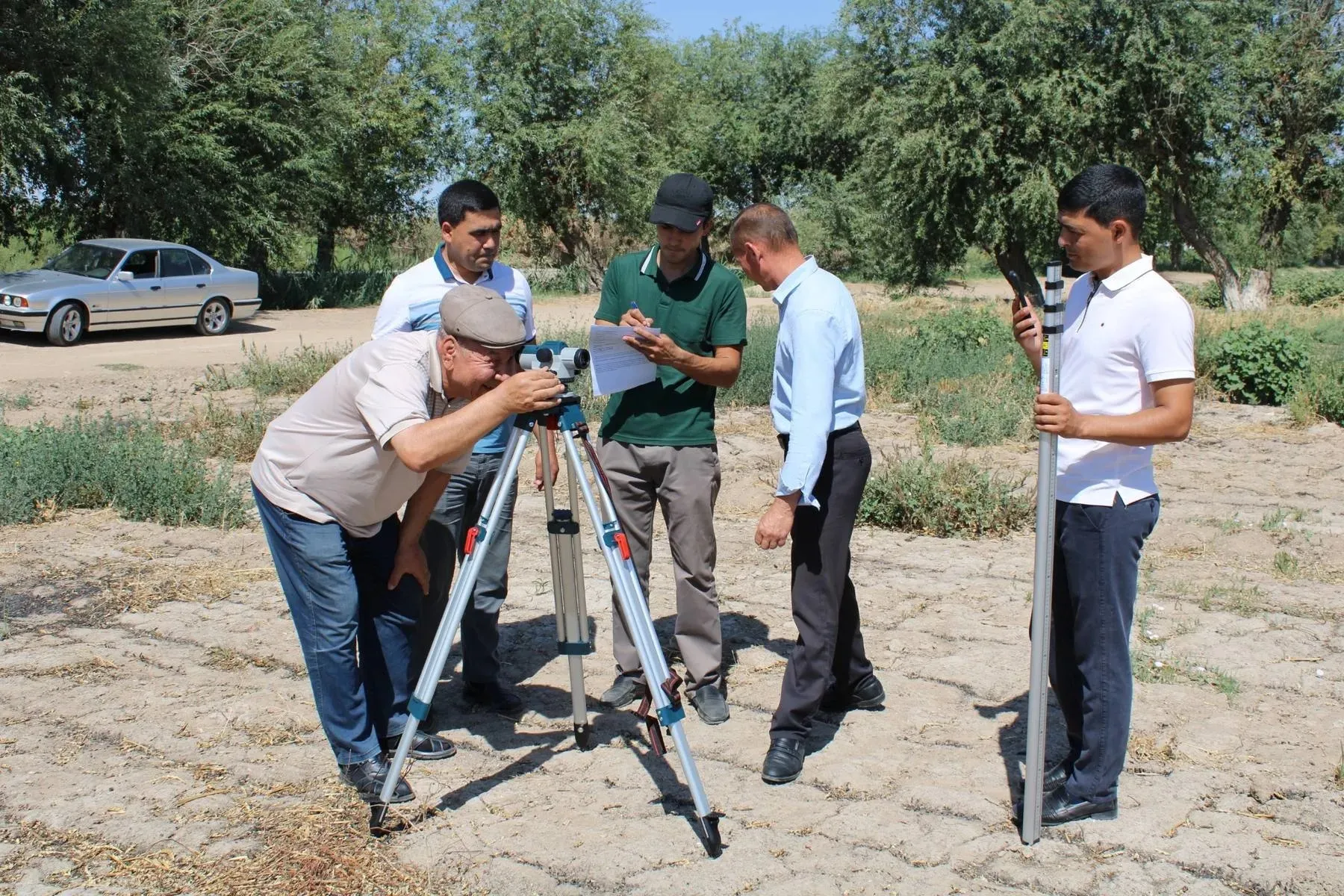
The institute received a manual soil auger for collecting samples from various horizons, a set of tensiometers for measuring soil moisture, a leveling instrument with a staff and tripod, a penetrometer for assessing soil density, and a portable field laboratory for soil analysis.
In addition to the handover of equipment, specialists received operational training and visited the institute’s experimental site, where they tested the machinery—specifically a leveling instrument—under real-world conditions. This device enables precise measurement of elevation differences, helping to account for terrain features when distributing irrigation water.
In the future, the laboratory will be equipped with a pH/EC meter for measuring water acidity, electrical conductivity, and mineralization; an electric water-level meter for determining groundwater levels; and a laboratory distiller.
The initiative is being implemented with the support of the regional program "Climate Risk Management in Central Asia," carried out by GIZ on behalf of the German government and co-financed by the United Kingdom. The program aims to reduce the risks of soil degradation and drought in the Murghab River basin and is being implemented jointly with the Ministry of Environmental Protection of Turkmenistan.
According to available data, in July 2026, temperatures in the Murgab basin region remained at 43–48°C for several weeks, leading to significant moisture loss and a halt in crop vegetation. Reduced river flow and water scarcity exacerbate soil salinization, while high temperatures adversely affect soil structure. Consequently, regular monitoring using modern equipment is considered a tool for enhancing soil resilience to climate change.