Login
Login


A conference dedicated to Turkmenistan's Diplomatic Workers' Day was held at the Institute of International Relations of the Ministry of Foreign Affairs of Turkmenistan. Representatives of the diplomatic corps accredited in Ashgabat, the leadership of international organizations, young diplomats, and students from specialized educational institutions participated in the event.
Before the conference, participants toured an exhibition organized by diplomatic missions of foreign countries and international organizations accredited in Turkmenistan. The exhibition, displayed in the institute's spacious atrium, attracted widespread attention: displays featuring national symbols, cultural objects, and art vividly reflected the diversity of countries maintaining diplomatic relations with Ashgabat.
Deputy Chairman of the Cabinet of Ministers of Turkmenistan and Minister of Foreign Affairs Rashid Meredov addressed the conference participants with a welcoming address. The head of the Foreign Ministry emphasized that the country's foreign policy priorities are consistently among Turkmenistan's key international benchmarks, but that this policy itself is not static.
"Turkmenistan's foreign policy is a vibrant, creative process of thought and action. Firmly grounded in an unshakable foundation—our constant neutrality—Turkmenistan's diplomacy follows, and often even leads, global developments," the minister stated, adding that the strategic guidelines and innovative initiatives of the President of Turkmenistan and the National Leader of the Turkmen People constitute the main guarantee of the effectiveness of the Turkmen foreign policy service.
Meredov also pointed to the emergence of new realities and challenges, which, along with emerging opportunities, complement the country's traditional diplomatic activities.
The minister specifically highlighted Turkmenistan's initiative at the 80th session of the UN General Assembly to declare 2028 the Year of International Law. According to Meredov, Ashgabat is convinced that international law must become "the key condition and most reliable support" for the future world order—a sustainable and equitable architecture of global security and development.
"Broad support for this proposal will be an important step in strengthening the international legal foundations for peace and cooperation and will have long-term positive consequences," he emphasized.
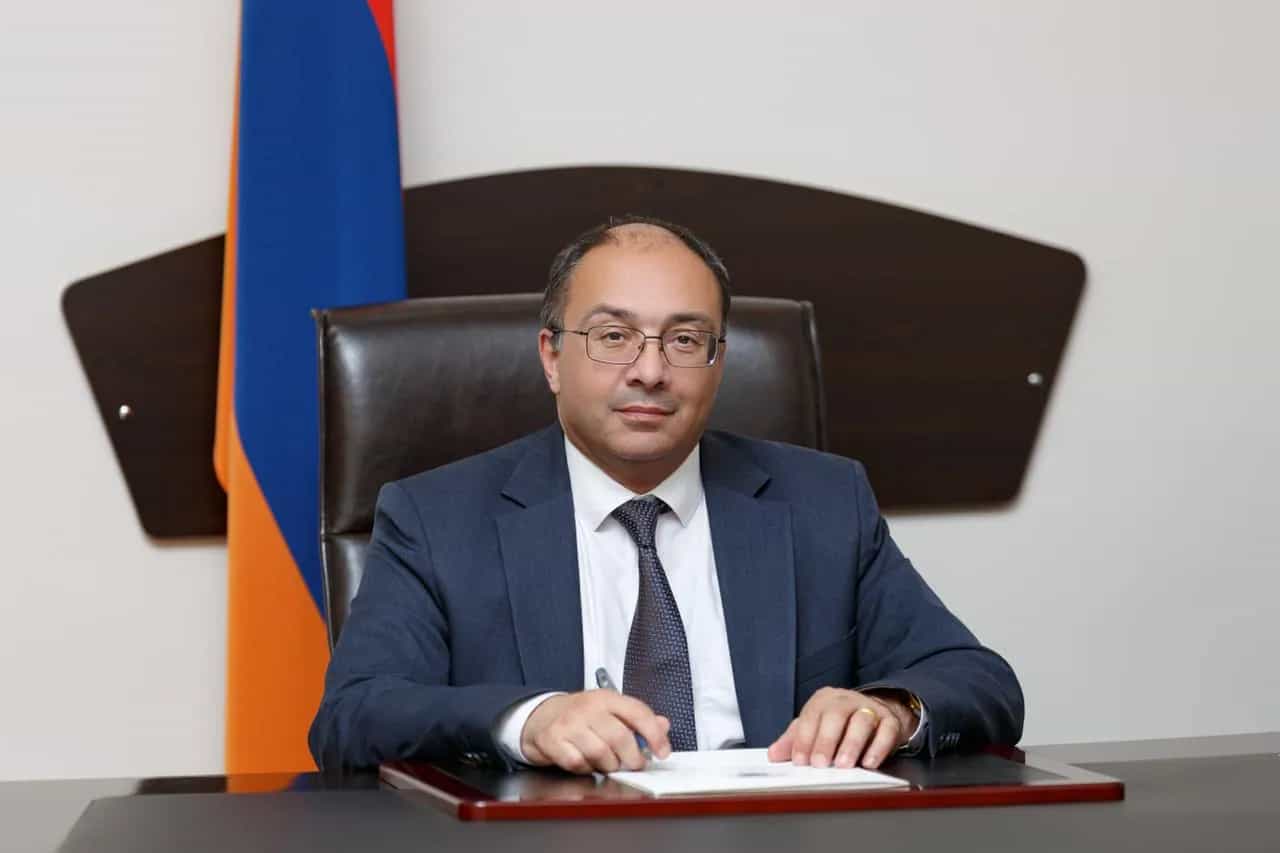
The conference was also addressed by the Special Representative of the UN Secretary-General and Head of the UN Regional Centre for Preventive Diplomacy for Central Asia, Kakha Imnadze; the UN Resident Coordinator in Turkmenistan, Dmitry Shlapachenko; the Ambassador of the Republic of Armenia, Arsen Avagyan; the Ambassador of the United Kingdom, Stephen Conlon; and the Head of the EBRD Office in Turkmenistan, Eric Livny.
The conference concluded with a festive concert performed by students of the Institute of International Relations of the Ministry of Foreign Affairs of Turkmenistan.