Login
Login


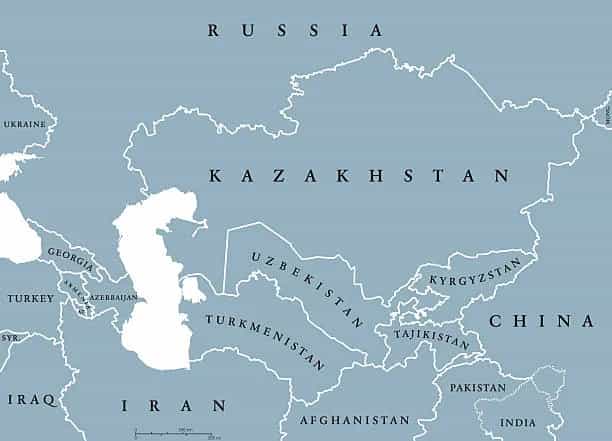
The Great Balkhan Mountains are located in northwestern Turkmenistan, stretching 70 km from east to west and approximately 40 km wide. Surrounded by deserts, the mountain slopes are home to approximately 553 unique plant species, including 96 essential oil species.
Today we will tell you about the Turkmen juniper, or, as it is also called, the Turkmen archa.
Two species of juniper grow in Turkmenistan: Turkmen juniper and Zarafshan juniper. The plant contains essential oils and other biologically active substances and has medicinal, ornamental, dye, food, and fodder properties.
Turkmen juniper (Juniperus turcomanica L.) belongs to the cypress family (Cupressaceae Bartl.). Endemic to the Kopetdag-Khorasan Mountains, it occurs in populations of 50 to 100, and sometimes 200-300 specimens per hectare, depending on location and sea level.
Turkmen juniper grows 2-10 meters tall. On the Great Balkhan, it grows in dry, rocky, and stony areas of mountain ranges at high altitudes.
In some places, it dominates the vegetation of mountain ranges, forming small, sparse forests.
Biologically active substances obtained from the bark, branches, and fruits of the Turkmen juniper are widely used in scientific medicine. The essential oil content of 300 grams of dry weight of Turkmen juniper was 1,35% in the fruits and 2,55% in the bark. Turkmen juniper from the Great Balkhan Mountains has lower essential oil content than specimens growing in the Kopetdag Mountains. This can be explained by the fact that, despite the proximity of the Caspian Sea to the Great Balkhan Mountains, the plant does not receive the necessary moisture; the isolation of these mountains from other mountain ranges; and the fact that the surrounding area is surrounded by deserts and a hot, dry climate.
To ensure the sustainable development of the Turkmen juniper in its natural habitat, given the extremely difficult nature of preserving the gene pool of juniper species and cultivating them under agricultural conditions (it grows very slowly) and its valuable properties, the plant was included in the 4th edition of the Red Data Book of Turkmenistan for 2024.
Source: website of the Ministry of Environmental Protection of Turkmenistan