Login


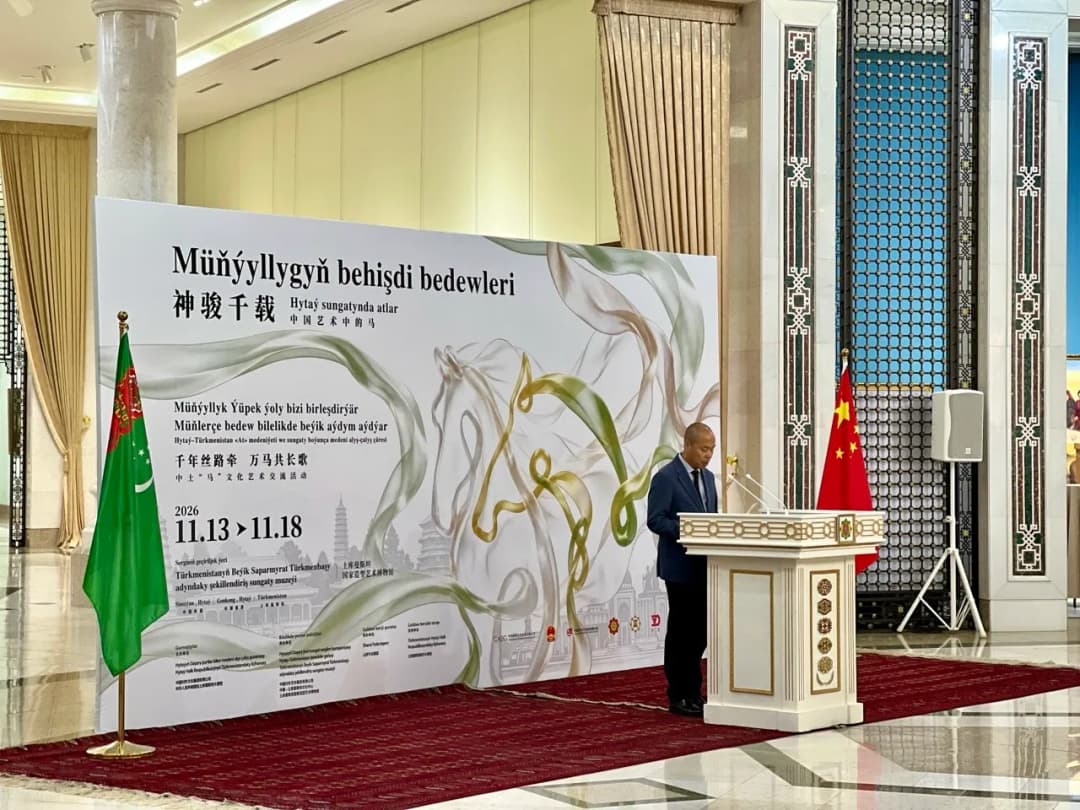
On November 13, a Chinese-Turkmen exhibition of culture and art titled "Steeds Through the Millennia: The Image of the Horse in Chinese Art" opened at the Saparmurat Turkmenbashy the Great Museum of Fine Arts of Turkmenistan. The opening ceremony was attended by the Minister of Culture of Turkmenistan, Gurbanmyrat Myradaliyev; the museum director, Ismail Orazov; the Chinese Ambassador to Turkmenistan, Ji Shumin; ambassadors from other countries; and various cultural and artistic figures from both nations. Speeches were delivered by the Minister of Culture, Chinese Ambassador Ji Shumin, and a representative of the "Turkmen Horses" State Association. The exhibition will run until November 18.
The exhibition features 44 works by contemporary Chinese artists. They showcase the aesthetics and grace of the horse, as well as a modern reinterpretation of its image.
The exhibition is part of a project taking place in 2026 across three regions: the Xinjiang Uyghur Autonomous Region of the PRC, Hong Kong, and Turkmenistan. The project is being implemented within the framework of the "Belt and Road" initiative and is intended to strengthen humanitarian ties and mutual understanding between the peoples of the two countries. In addition to the exhibition, the program includes a children’s art contest titled “Young Artists of the Silk Road” and joint demonstrations by Chinese and Turkmen equestrians. The project is organized by China International Culture Group Co., Ltd. and the Embassy of the People’s Republic of China in Turkmenistan.
The first to speak was Minister of Culture Gurbanmyrat Myradaliyev. He congratulated the participants on the opening of the exhibition and noted that, thanks to the efforts of the National Leader of the Turkmen people, Gurbanguly Berdimuhamedov, and the heads of the two states, relations between the countries are developing extensively. According to him, the exhibition—held during the year themed "Independent, Neutral Turkmenistan – Homeland of Purposeful, Winged Horses"—will help different peoples gain a better understanding of each other’s equestrian culture and art. The Minister noted other joint projects from this year—an exhibition in Shanghai and the exhibition "Amazing China: Art and Beauty of Xinjiang," which opened at the museum on October 29—and expressed his confidence that the current exhibition would further strengthen cultural cooperation between the two countries.
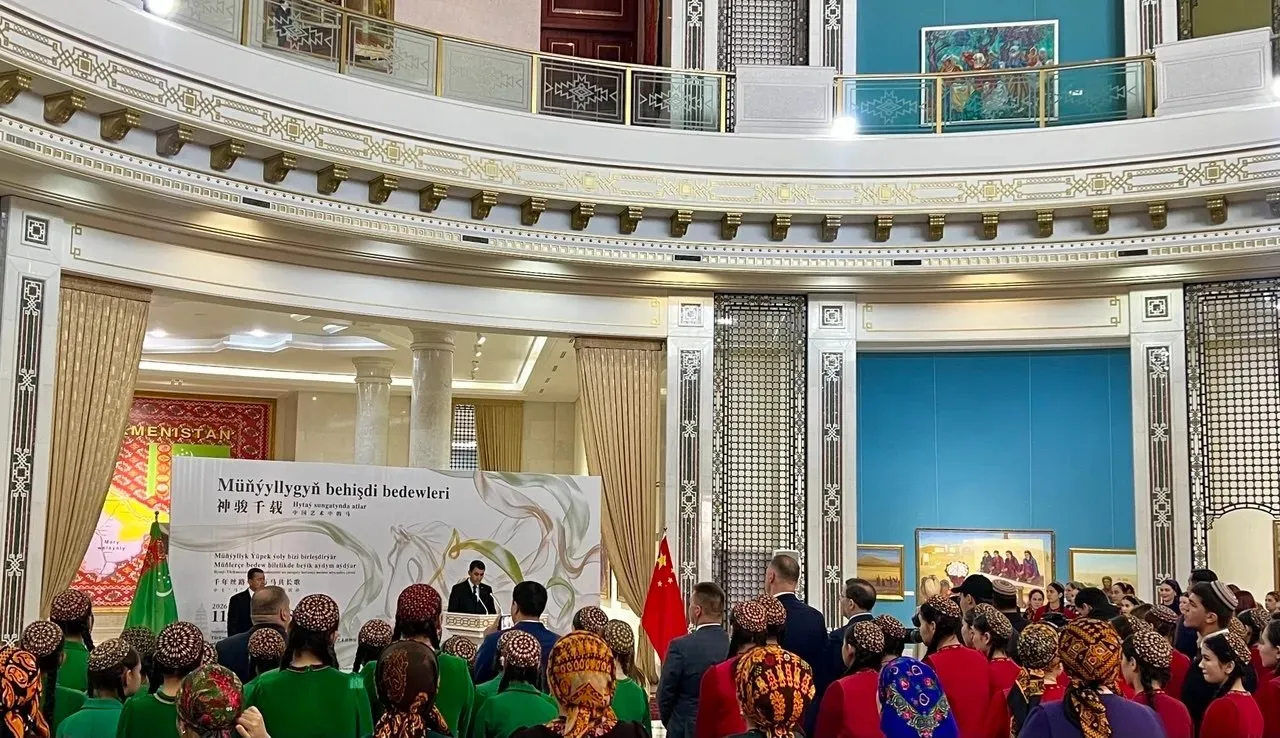
Next, the Ambassador of the PRC to Turkmenistan, Ji Shumin, took the floor. He described the current year as an important one for bilateral relations and reminded the visit to China in March by the National Leader of the Turkmen people, Gurbanguly Berdimuhamedov, during which an agreement was reached with PRC President Xi Jinping to deepen the comprehensive strategic partnership. Ji Shumin mentioned the visit to Turkmenistan in April by Ding Xuexiang, Vice Premier of the State Council of the People's Republic of China, during which, among other things, an agreement was signed on the reciprocal establishment of cultural centers. The ambassador described humanitarian cooperation as an important component of the relationship, noting that the image of the horse carries positive symbolic meaning in the cultures of both nations. The diplomat expressed his hope that the exhibition would help visitors better appreciate the friendship between the two peoples.
The final speaker was Guychmurat Baymuradov, head of the Department for the Registration of Purebred Horses and Scientific Breeding at the "Turkmen Horses" State Association. He spoke about the state program for the development of horse breeding and the preservation of the purity of the Ahal-Teke breed, describing these horses as one of the greatest cultural treasures of the Turkmen people. Baymuradov cited historical evidence for the antiquity of horse breeding in the country—specifically, the burial of a foal dating back to the 3rd millennium BCE, discovered at Gonur-Depe. In his view, these archaeological findings suggest that Turkmenistan was the first place in the world where horses were domesticated.
The organizers invite everyone to visit the exhibition, which will be on display at the Museum of Fine Arts of Turkmenistan until November 18.