Login
Login


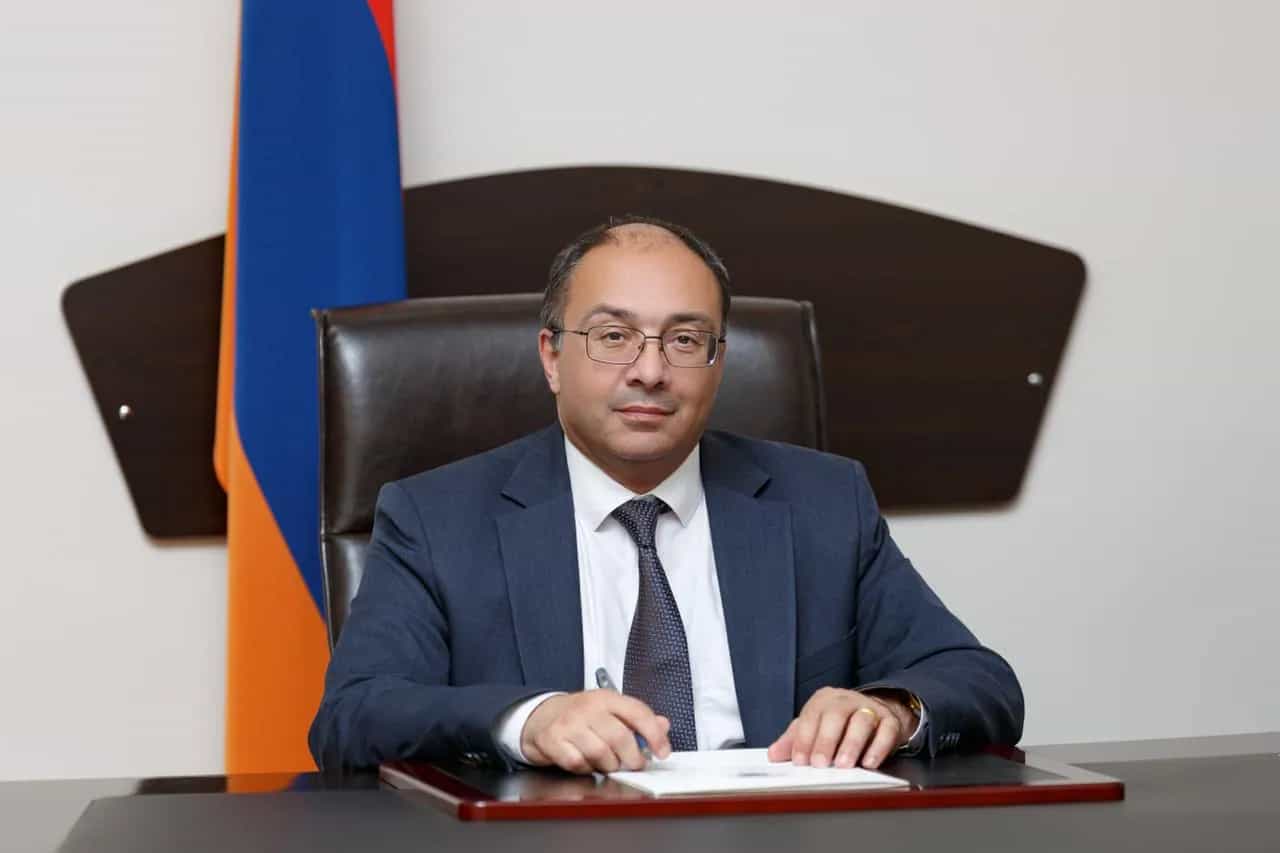
Maciej Adam Madalinski, the Deputy Ambassador Extraordinary and Plenipotentiary of the European Union to Turkmenistan, took up his duties on September 1, 2025.
Today, Mr. Madalinsky was a guest of our editorial team. In response to our question about the first steps he has taken in his new position, he mentioned that he has had a number of meetings, including at the Ministry of Foreign Affairs of Turkmenistan and with colleagues from partner Embassies and International Organisations. Additionally, he attended the International Conference “The Role of Women in Modern Society”, which was held in Avaza on the eve of the 30th Anniversary of Turkmenistan's Neutrality.
- Mr. Madalinsky, what are your first impressions of Turkmenistan in general?
-I was impressed by the hospitality of the Turkmen people, the national cuisine, and the city infrastructure. I eagerly await being able to explore more of the country! I know a few other places in Central Asia, and I admire all the region, but every country in the region is different, so I look forward to discovering the attractions of Turkmenistan! Indeed, I hope to visit all the regions of the country, as each of them will surely surprise me with new things!
- How would you describe the recent success in relations between Turkmenistan and the European Union? What indicators show this?
-The most important directions of recent cooperation are, undoubtedly, private sector support, trade and transport development, green transformation and support to Civil Society in Turkmenistan.
For example, the project “Turkmenistan: Enhancing Trade Resilience and Integration” achieved several concrete milestones, most notably the preparation of Turkmenistan’s Memorandum on Foreign Trade Regime (MFTR) - a key document required to launch crucial WTO accession negotiations. With the project’s support, 14 national legislative acts were translated into English, enabling the finalization of the MFTR draft, which is now undergoing governmental approval before submission to the WTO Secretariat. In parallel, the project works on strengthening negotiators’ ability to prepare Turkmenistan for accession talks in the best possible way. A dedicated national trade policy advisor — embedded in the Ministry of Finance and Economy — further ensures daily technical support, advancing both MFTR preparations and broader legislative alignment efforts.
Another example is the EBRD’s “Advice for Small Businesses in Turkmenistan” Programme, funded by the EU, which was being implemented between 2018 and 2025. During the lifetime of the programme (since 2018), 225 enterprises have been assisted through 212 advisory projects, exceeding the programme’s targets by 125%. 72% of beneficiary enterprises increased their turnover, 58% improved productivity, and 56% expanded their workforce following the interventions. The programme de facto made the concept of business consulting in Turkmenistan more concrete.
On green transformation, the EUR 4.5 million “EU for a Green Turkmenistan: Policy Dialogue and Climate Action” project, implemented by GIZ, is bringing tangible results in the field of green energy through concrete pilot actions, trainings and policy support. A key achievement was the launch of a solar-powered algae-based drainage water treatment pilot, including the identification of the pilot site, the preparation of technical specifications and the establishment of a dedicated working group. In parallel, preparations advanced for the deployment of modern systems of methane emissions monitoring. The project also supported the development of a national public outreach strategy on renewable energy and energy efficiency and supported a Youth Climate Conference. These activities are now being further expanded through the delivery of equipment, advanced technical trainings and EU–Turkmenistan green energy events.
The European Union will launch in early 2026 a new EUR 2 million initiative implemented together with the International Labour Organisation to support Turkmenistan’s ongoing efforts to modernise labour governance and promote decent work in the cotton sector. The project will provide technical assistance for legislative improvements, help align national frameworks with key international labour standards, and strengthen inspection, grievance-handling and awareness-raising mechanisms.
I would also commend the openness in our regular dialogues, such as joint committee meetings and the human rights dialogues, which in the recent years are growing in quality of interaction.
- In your opinion, what are the most promising areas for future partnership with Turkmenistan?
-The EU believes that there is a huge potential for cooperation with Turkmenistan in the area of green transition, and emission reduction - notably for methane emissions.
Turkmenistan possesses remarkable a natural energy potential — abundant sun, strong winds, and vast land suitable for renewable projects — and the EU has long-standing expertise in clean technologies, sustainability standards, and investment frameworks. Together, these strengths create a foundation for a modern, forward-looking energy partnership that benefits both sides. In concrete terms, to support the development of Turkmenistan’s renewable energy, it is important to strengthen national and regional electricity grids. The EU would be happy to share its experience in this area. And, seeing the great potential of Turkmenistan joining the Global Methane Pledge at COP-28 in 2023, the EU will continue to support your country in developing best technologies aiming at methane emissions reduction.
The same concerns rare minerals: as global demand for critical raw materials continues to rise, the emphasis on sustainable cooperation in this area becomes increasingly important. Central Asia is already an important partner for the EU for critical minerals - which are much needed in Europe to power its green and digital transitions. Should Turkmenistan express interest, cooperation in this area could become an additional avenue of partnership.
- What are your plans for the beginning of 2026?
-We look forward to a very busy year ahead. The first EU-Turkmenistan Business Forum is planned for the end of March 2026. It will be a first occasion to bring together business partners from most EU countries and Turkmenistan at this scale, although of course bilateral events with Member States have been already happening for several years. We also plan to hold, jointly with Turkmenistan, the first EU-Central Asia Women’s Forum!
But before that, young volunteers and other participants from Turkmenistan will go to the EU-Central Asia Civil Society Forum, planned to be held in Bishkek at the beginning of February.
The EU and Turkmenistan are also discussing a possible high-level visit to Brussels, which could take place in the course of next year. We will be happy to communicate to the readers more details, once they become available.
Finally, in 2025, we celebrated together the UN Year of Peace and Trust, and I take the opportunity to wish all readers a peaceful and prosperous New Year 2026! We need peace more than ever in these difficult geopolitical times, and the EU is a strong proponent of a just and fair peace.
- Thank you for the conversation, Mr. Madalinski. We wish you success in your mission in Turkmenistan!
- Thank you, and have a wonderful New Year!