 Login
Login































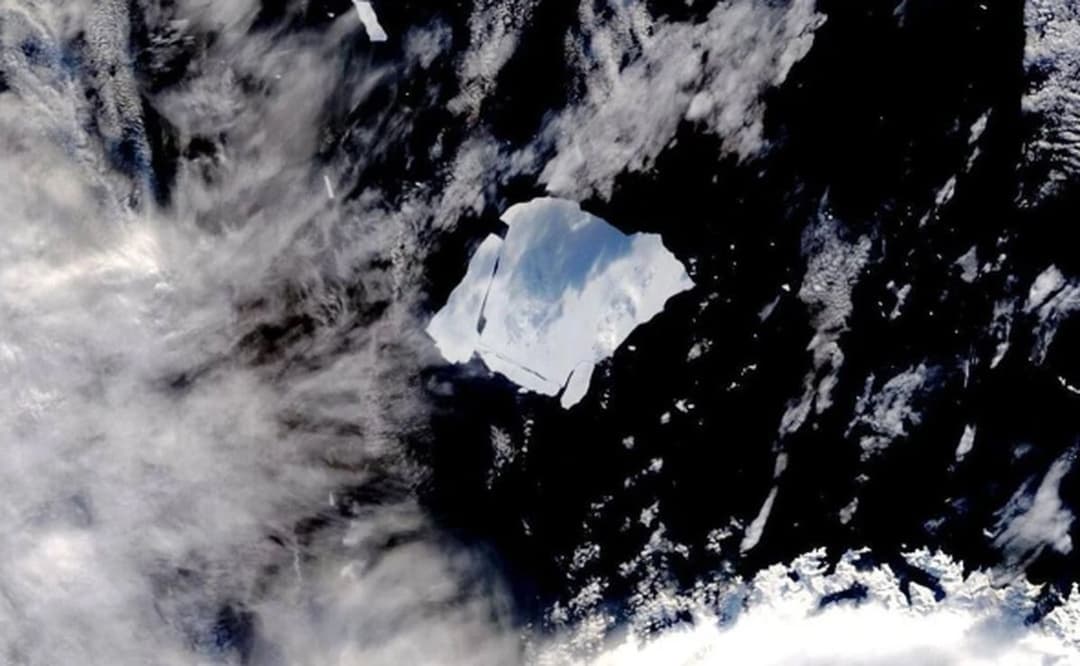
Iceberg A23a, which is considered the largest in the world, lost 36% of its area during the Antarctic winter and broke up into several fragments. The monitoring data was provided by the Arctic and Antarctic Research Institute, writes RBK.
By early June, the iceberg's area was 2,730 square kilometers, an area comparable to the size of Moscow. By now, the size has shrunk to 1750 square kilometers, which is the same size as St. Petersburg. The reduction was 980 square kilometers.
Simultaneously with the reduction of the main mass, three large fragments, each measuring from 60 to 300 square kilometers, broke off from the iceberg.
A23a is currently located about 70 kilometers north of South Georgia Island. During the winter months, the iceberg moved about 930 kilometers, following the ocean currents around the island. From January to May of this year, it remained stationary near the same island.
Iceberg A23a broke off from the Filchner Ice Shelf in West Antarctica in 1986. It originally measured 4170 square kilometers. The iceberg remained stationary in the Weddell Sea for more than 30 years, only resuming movement in late 2023 after a long period aground.